
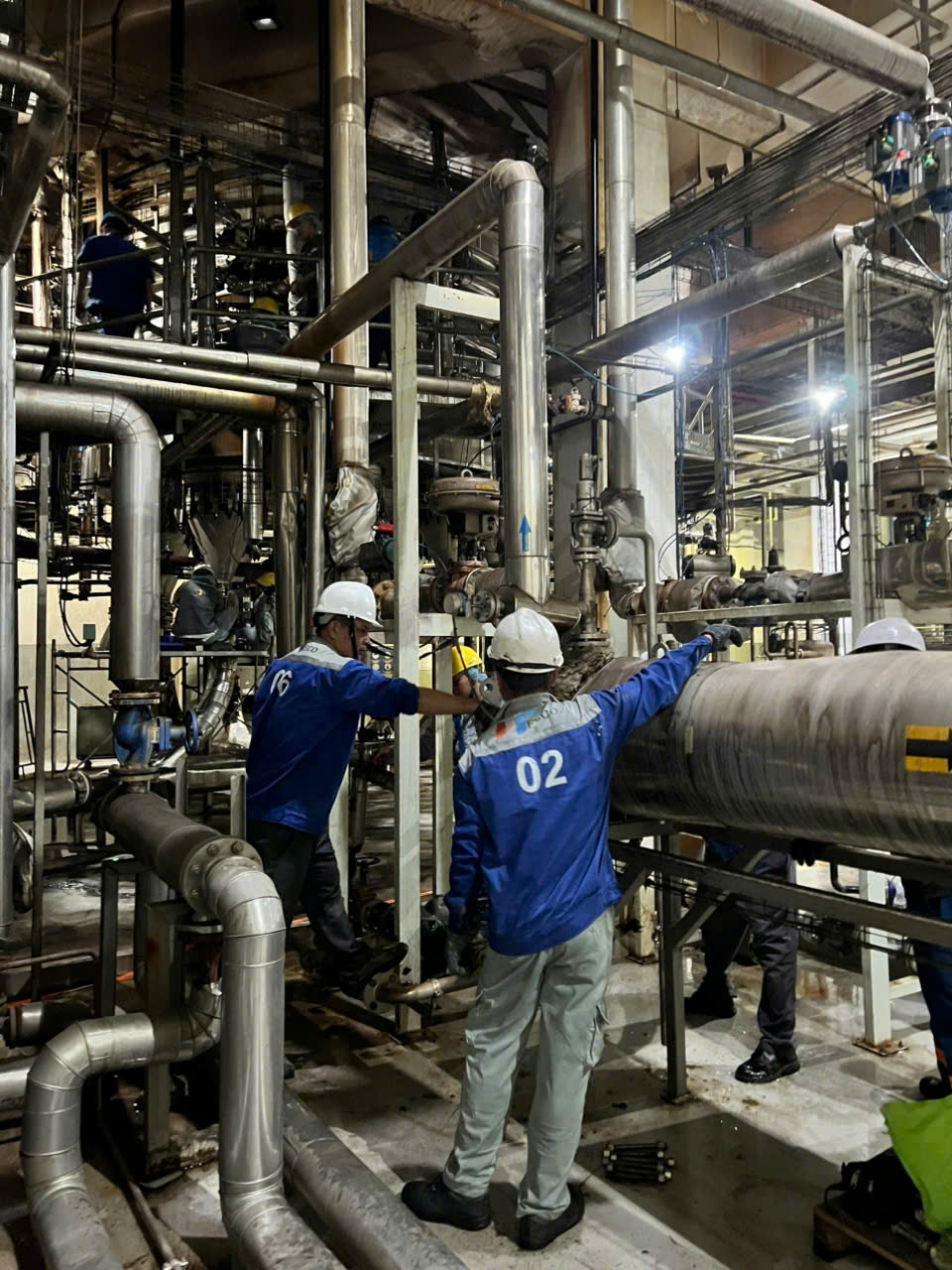
Shell and tube condenser cleaning servicing for Coffee factory
A coffee processing plant utilizes various types of heat exchangers throughout the production process to heat and cool coffee extract during the extraction and concentration stages.
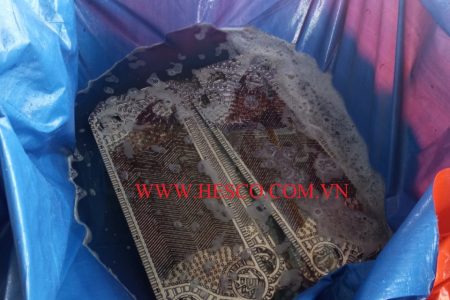
The plant consumes a significant amount of steam throughout the production line. To recover waste heat from excess steam and utilize it for hot-water production, the plant uses shell-and-tube condensers.
The cleaning and maintenance procedure is carried out by the Hesco technical team as follows:
1. Equipment Preparation and Isolation
Stop the equipment and completely isolate it from the system.
Close the inlet and outlet valves on both the shell side and tube side.
Depressurize the equipment, drain all process fluids, and confirm that the equipment has reached a safe pressure.
If hazardous fluids are involved, flush/purge the equipment and perform gas testing before opening the equipment.
Implement LOTO (Lockout/Tagout) before removing any flange or equipment cover.
Prepare new gaskets, dismantling and installation tools, lifting equipment, and suitable cleaning chemicals.
2. Tube-Side Cleaning
The cleaning method shall be selected according to the type and severity of fouling.
Circulate clean water through the tubes.
High-pressure water jetting may be used for cleaning.
For soft deposits, use suitable cleaning brushes or tube-cleaning rods.
The following methods may be used:
Use a suitable descaling chemical compatible with the tube material.
Circulate the cleaning chemical at the concentration, temperature, and duration specified by the chemical manufacturer’s recommendations.
After chemical cleaning, thoroughly neutralize and rinse the tubes with clean water.
Note: Do not use strong acids without confirming their compatibility with the tube material. Stainless steel, carbon steel, copper, and titanium have different chemical resistance characteristics.
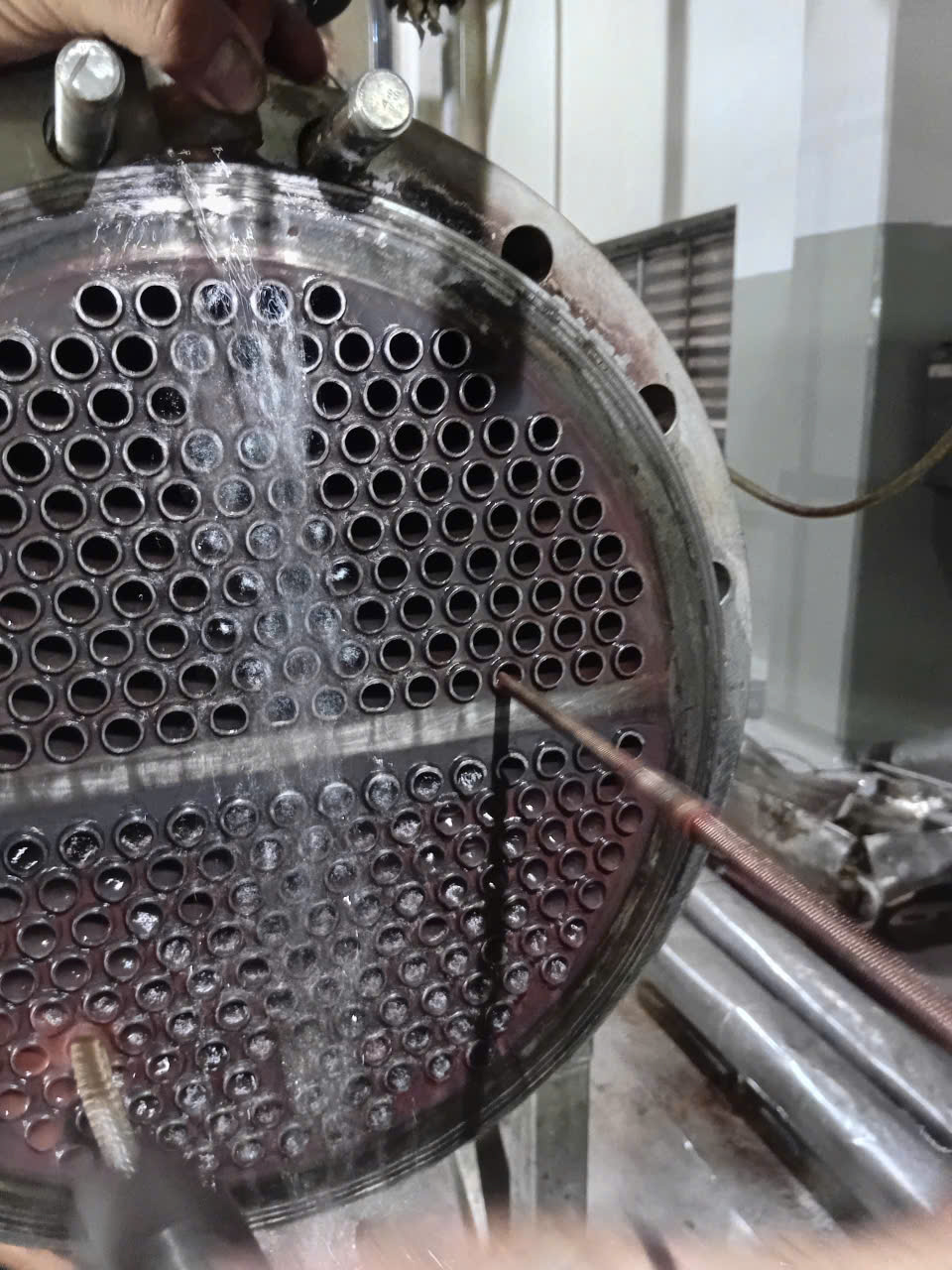 3. Shell-Side Cleaning
After opening the channel cover or removing the tube bundle, if required:
Remove sludge, rust, deposits, and foreign materials.
Clean the shell side using high-pressure water.
If deposits are present on the baffles, shell, or tube bundle, clean them using suitable mechanical or chemical cleaning methods.
Inspect the clearance between the tubes and baffles. Avoid using tools that may dent, deform, or scratch the tubes.
4. Gasket and Flange Inspection
Remove the old gaskets.
Thoroughly clean the sealing surfaces.
Inspect the flanges for scratches, deformation, warping, or corrosion.
Replace the gaskets with new ones of the correct type, size, and material.
Tighten the bolts in a crosswise/diagonal sequence using the specified torque.
6. Reassembly and Leak Testing
Upon completion of the cleaning and inspection:
Reinstall the tube bundle and equipment covers.
Tighten the flanges to the specified torque.
Close all drains and vents that are no longer required.
Fill the equipment with water or the designated test medium.
Increase the pressure gradually.
Check for leakage at the following locations:
Tube sheet
Channel cover
Shell flange
Nozzles
For more than 10 years, Hesco has been trusted by customers for its high-quality products and professional technical services, including:
Hisaka plate heat exchangers, spiral heat exchangers, and fully welded heat exchangers
Hisaka ball valves, Schroedahl pump protection valves, AVK valves, and Koso valves
Torishima high-pressure boiler feed pumps
Piller Mechanical Vapor Recompression (MVR) compressors
Hotline: (+84) 0981 096 439
Sales Director: Mr. Vân