
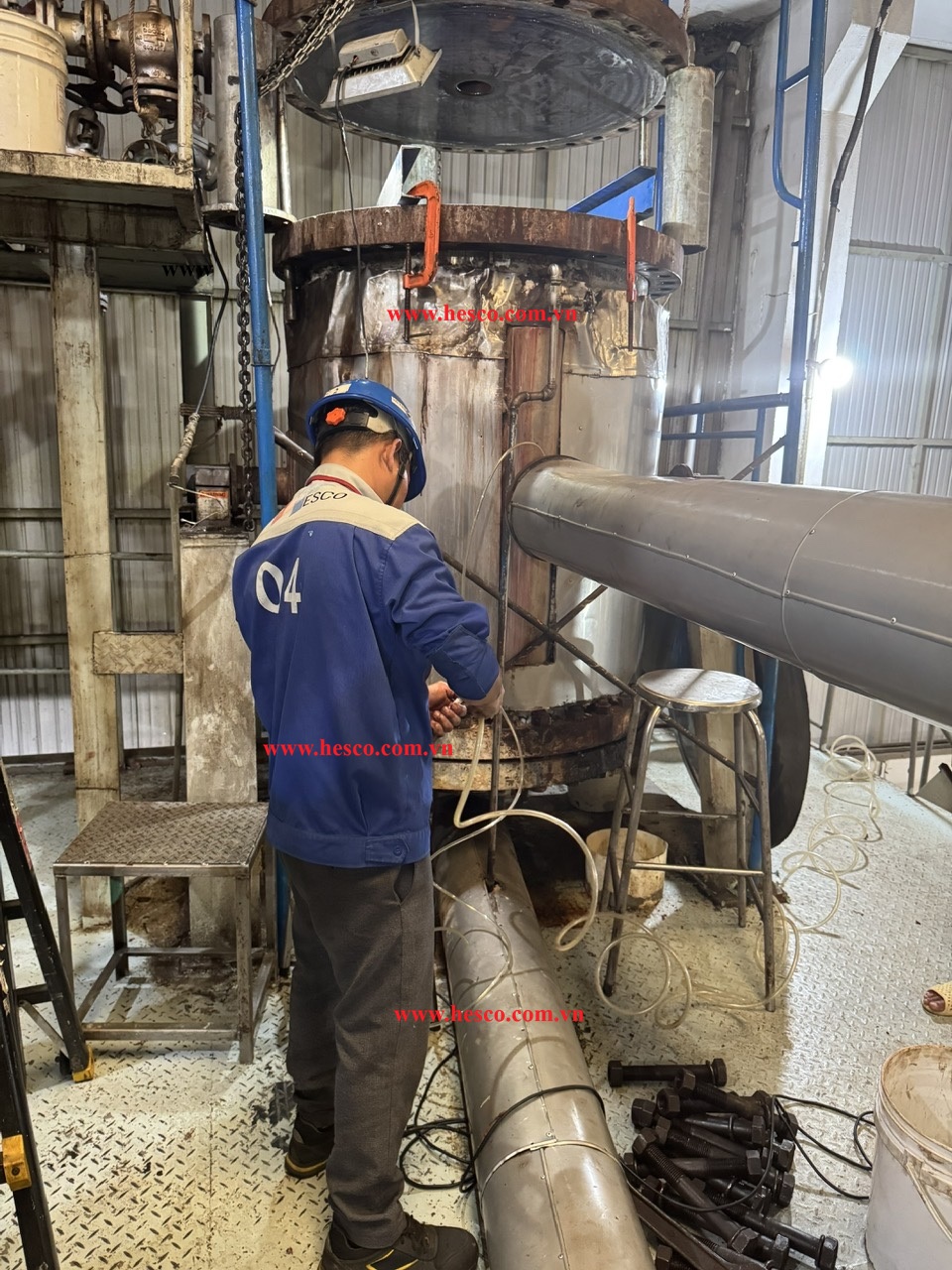
Repair service for spiral heat exchanger at Instant Noodle factory
1. Equipment Condition
During the operation of the noodle frying line, the factory observed several abnormal conditions related to the shortening oil heating system:
The temperature of the shortening frying oil increased slowly and was unstable.
Boiling was observed in the frying oil tank.
The frying oil was contaminated with water, resulting in a cloudy, emulsion-like appearance.
The noodle frying line was consuming an unusually large amount of steam.
The factory had previously opened and inspected the spiral heat exchanger but was unable to identify the root cause of these problems.
As the equipment condition was directly affecting heating efficiency and production capacity, the factory contacted Hesco, which has many years of experience in supplying, inspecting, and repairing heat exchangers, to inspect the equipment, identify the root cause, and implement corrective actions as soon as possible.
2. Root Cause
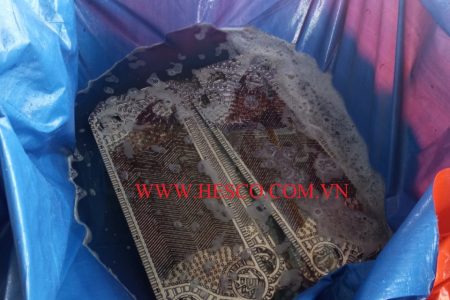
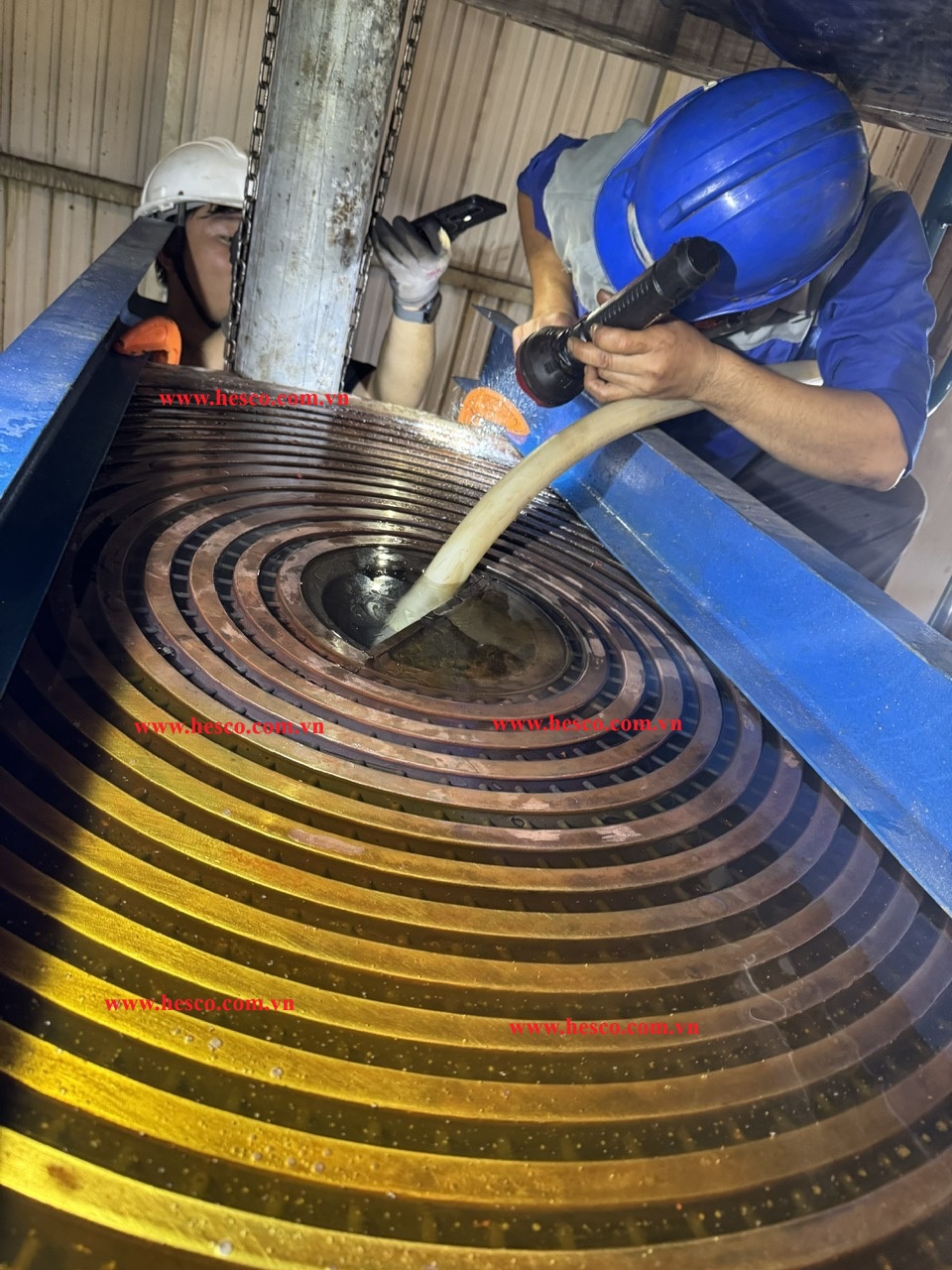
After opening the heat exchanger and conducting a water pressure/leak test, Hesco identified a crack in the spiral heat exchanger.
The crack created a leakage path, allowing steam from the heating side to enter the frying oil. The presence of water/steam in the oil caused water contamination and resulted in a cloudy, emulsion-like appearance.
At the same time, the water/steam entering the oil caused boiling in the frying oil tank and reduced the heat-transfer efficiency. As the heat-transfer performance decreased, the system required a higher steam consumption to maintain the required oil temperature.
Cause-and-Effect Chain:
Cracked heat exchanger → Steam entering the frying oil → Water contamination and emulsion formation → Boiling in the oil tank → Reduced heat-transfer efficiency → Slow and unstable oil temperature increase → Increased steam consumption → Reduced production performance
3. Corrective Action
After identifying the leakage location, Hesco’s welding technicians marked and thoroughly cleaned the affected area before carrying out the repair using a specialized TIG welding machine.
After welding, the weld joint was inspected using a three-color dye penetrant test to detect any cracks or surface defects and ensure the quality and integrity of the repaired weld.